






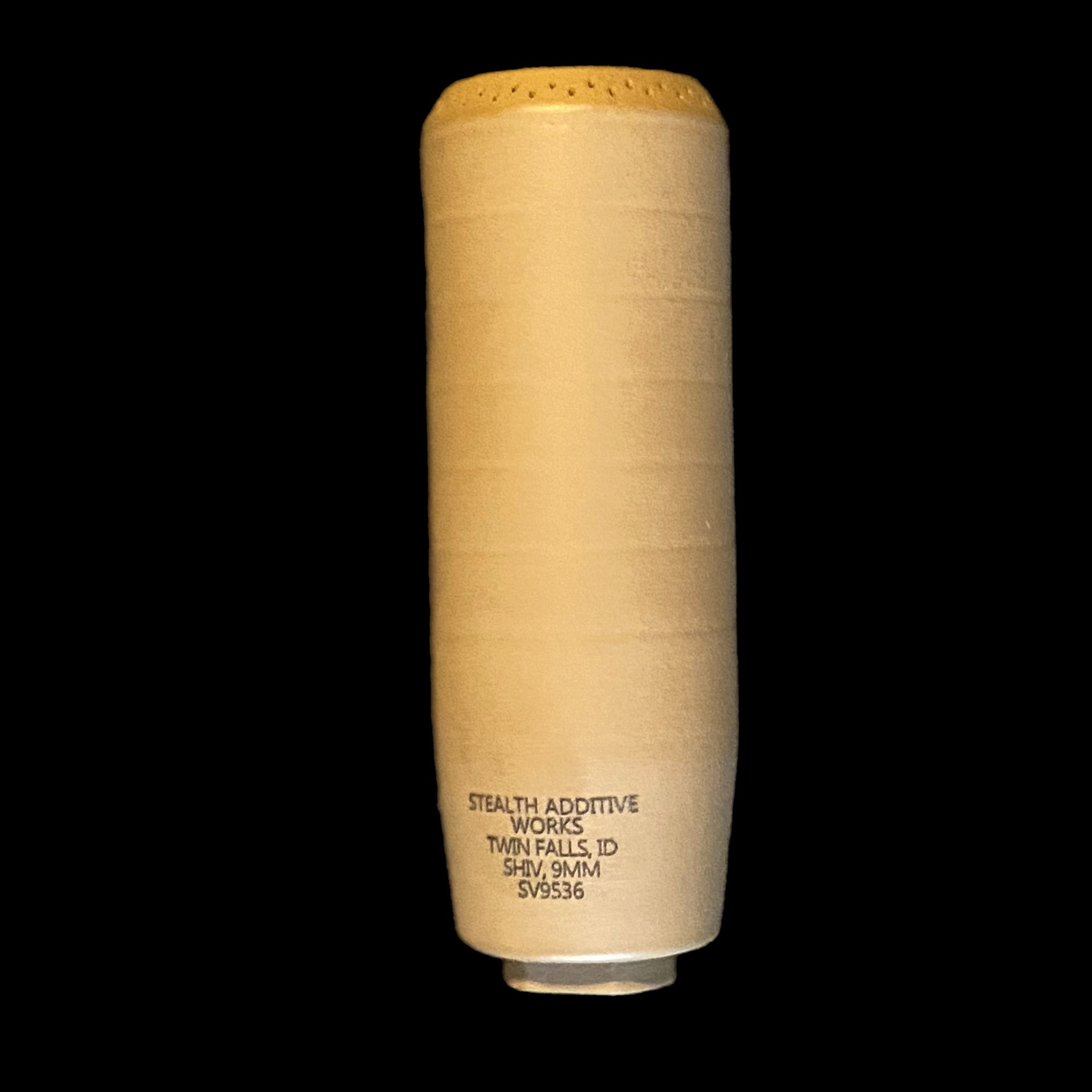


SAW SHIV 9MM Suppressor
Original price was: $559.00.$529.00Current price is: $529.00.
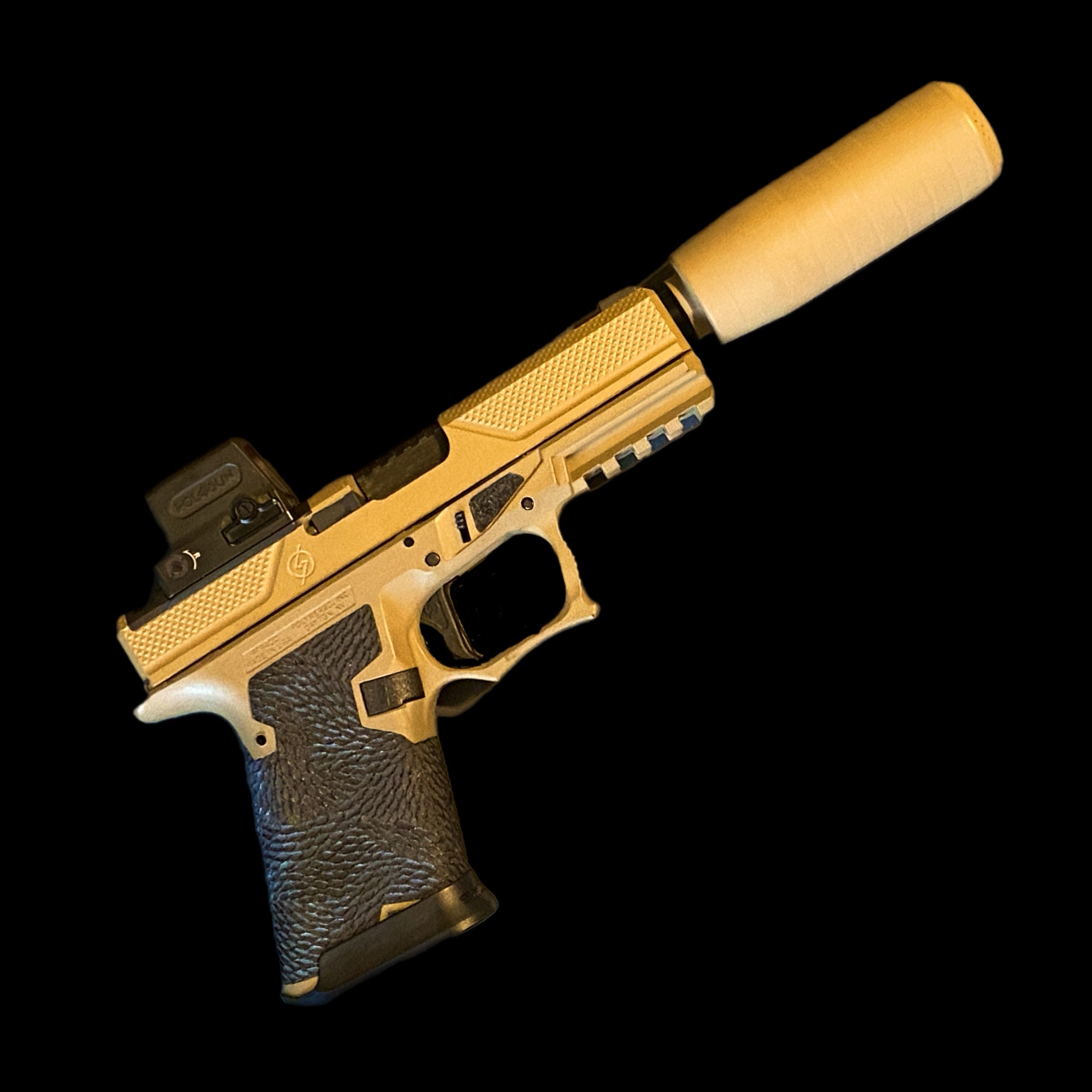
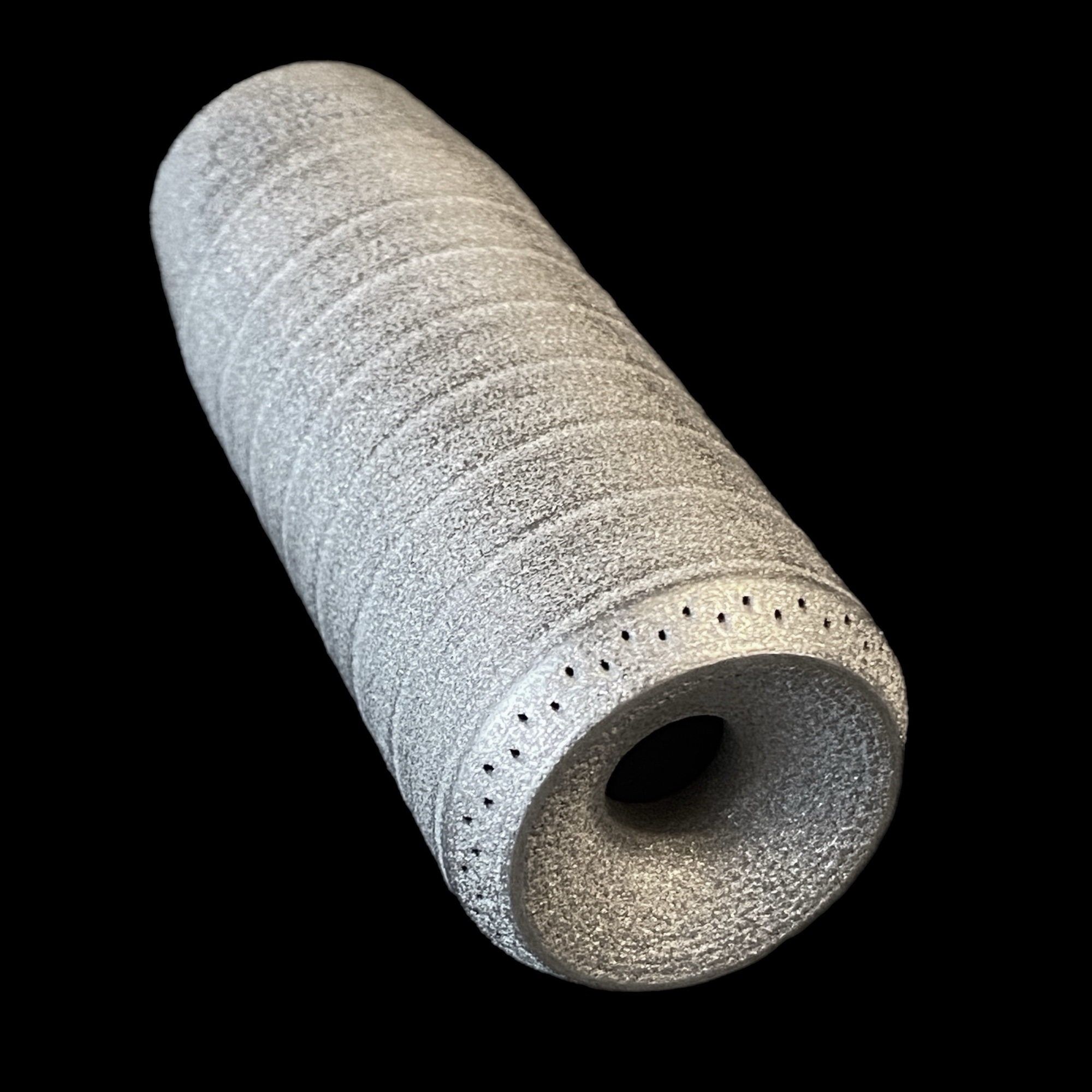
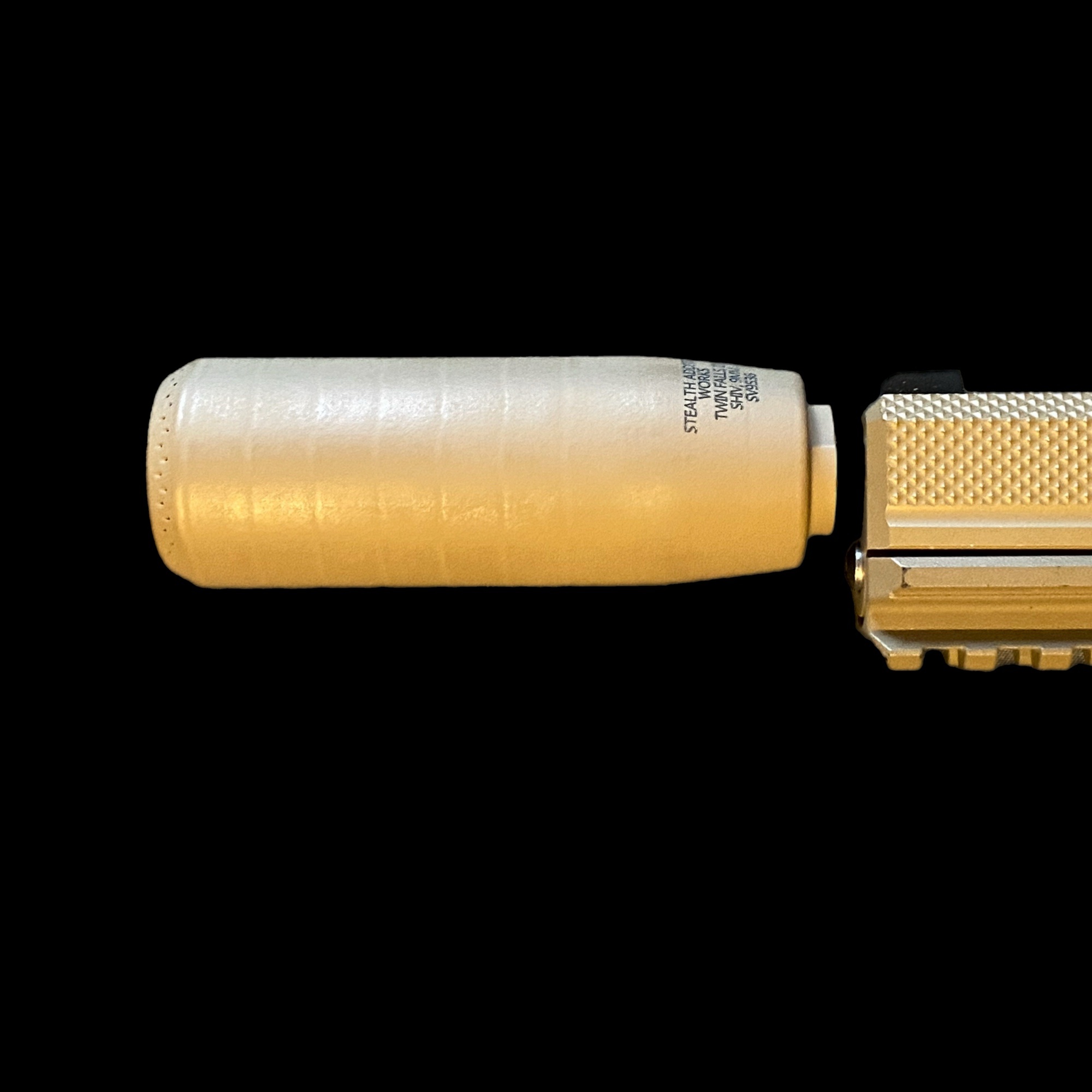
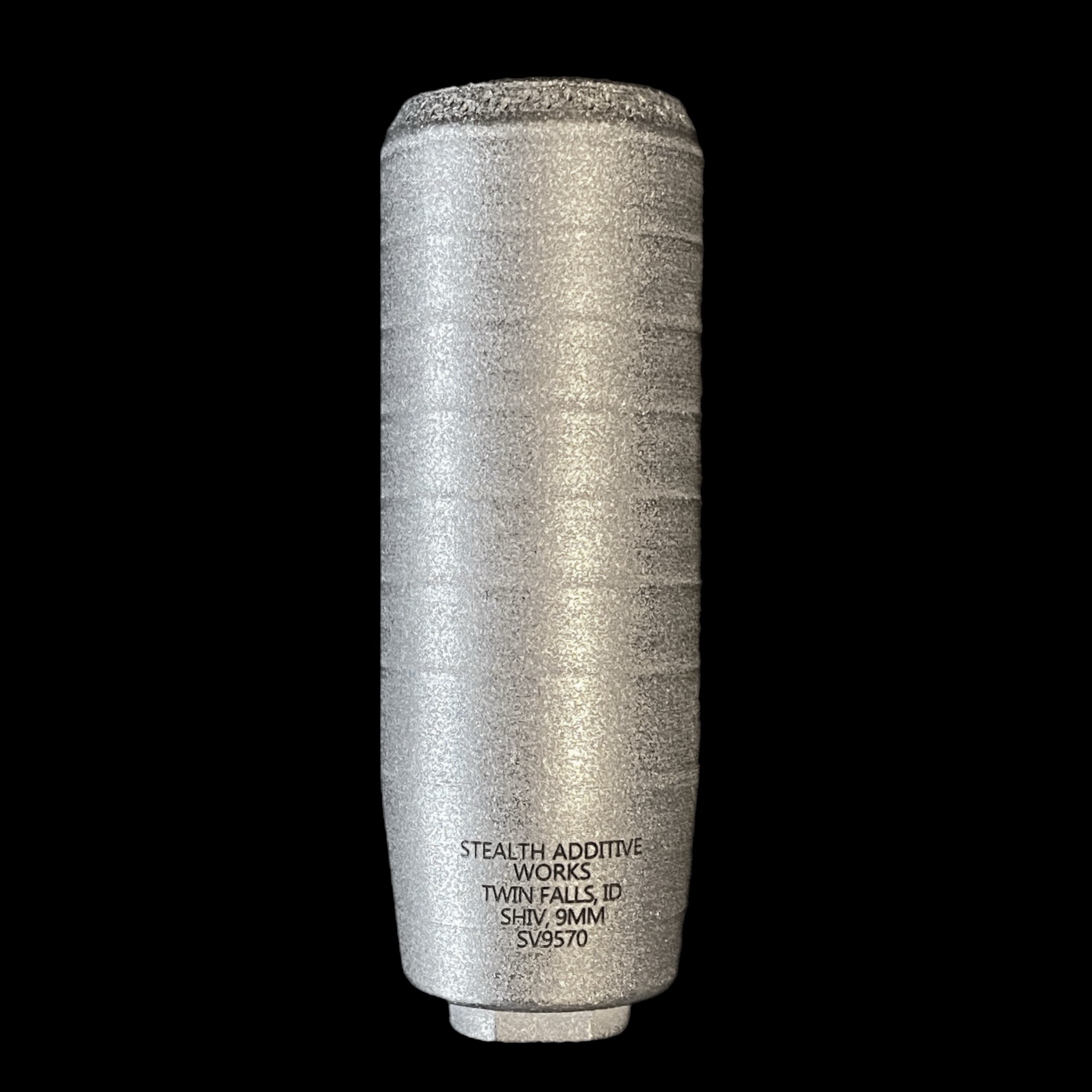
The Stealth Additive Works SHIV 9mm suppressor is a small yet lightweight solution engineered for exceptional performance with 9mm pistols and pistol-caliber carbines. Made with premium 3D-printed Grade 5 (ELI) Titanium, the SHIV weighs just 2.5 oz. It offers durability, excellent sound suppression while maintaining semi-auto pistol function. The low weight, and short length eliminates the need for a booster on most 9mm pistols.
- Lightweight and Compact Design: At only 2.5 oz and 3.7 inches in length, the SHIV delivers shockingly effective sound performance for its size.
- Compact Package: Perfect for a home defense PCC or pistol, the SHIV helps reduce the risk of permanent hearing loss if a firearm is used in a defensive situation, especially indoors.
- No Booster Required: Engineered for reliable use on most 9mm pistols without the need for a booster.
- 3D-Printed Titanium: Constructed from premium Grade 5 (ELI) Titanium for superior strength, corrosion resistance, and long service life.
- Cerakote Finish: Available in FDE, Black, or Raw Titanium.
- Easy Cleaning: Clean using an ultrasonic bath or by soaking in a suppressor cleaning solution (recommended every 2,000–3,000 rounds).
Can't find it in stock here? Utah customers can order our complete lineup through Silencer Shop with Pew Pew Solutions as your dealer, no transfer fee.
Browse the full lineup →
Why Choose the SHIV?
The Stealth Additive Works (SAW) SHIV 9mm suppressor combines our trademark creative engineering and 3D printing to deliver a lightweight yet robust suppressor. The SHIV removes the complexity of a booster system. The SHIV is meant to be small and compact, it is riding the razor’s edge of performance with its mass and length. Reliable cycling on pistols hinges upon Not only the mass of the suppressor, the location of the center of mass. We have done our homework to give you the best possible balance of sound performance and reliability on your semi-Auto pistol.
Note: The Glock 19,17, and Glock 34 are the most sensitive pistols for cycling with suppressors (even with a booster). Main spring weight may need to be reduced to ensure reliable cycling due to variables in shooter recoil management and low pressure range ammunition. We have found in some cases that there is a break in period of 30-50 rounds.
What is the difference between a suppressor and a silencer?
There is no difference; these are just different words for the same thing.
The word “silencer” is the legal term; but, either “sound suppressor”, or just “suppressor”, is more technically accurate since they don’t actually silence the firearm. You can use either term with us and we’ll promise not to care.
What does a suppressor do?
How a suppressor works is by dramatically reducing a gunshot noise by slowing the decompression of hot, high-pressure gasses. A firearm suppressor creates a controlled environment in which these gases expand and cool before they make contact with ambient air. Imagine untying a balloon instead of popping it, or slowly removing the champagne cork just enough for gas to vent in a slow and steady fashion: you would hear a hiss instead of a pop.
Is it legal to own a silencer?
Under federal law, it has never been illegal to own a silencer. If it is legal for you to buy a handgun, and you live in a state that allows suppressor ownership, then it is probably legal for you to own a silencer. The basic requirements are as follows:
- You must be at least 21 years old
- You must live in a state that allows ownership
- You must not have any felony convictions
Do I need a special license to own a silencer?
No! There are some rumors that you need to have a “Class 3” license to own a silencer, but this simply isn’t true. You do have to pay for a “tax stamp” when you first buy the suppressor – but there are no ongoing fees or licenses required. This tax is similar to paying sales tax on a purchase, except that it goes to the federal instead of the state government.
Do silencers work?
Yes, silencers are an effective way to provide hearing protection, with most models providing as much or more sound reduction in decibels (dB) as the most effective over- or in-ear sound protection. Instead of blocking out the sound at your ear, you’re blocking the sound at the muzzle. Silencers give the gas of the gunshot ample space to expand, while using various means to slow down, trap, and redirect the gasses inside so they’ve dropped as much pressure and temperature as possible when the gases exit the muzzle. Attaching a silencer to your firearm is a substantial improvement when you’re hunting, target shooting, or otherwise engaging with your firearm. By attaching a suppressor to your firearm, you’ll have the hearing safety benefits of over-ear hearing protection, without sensory deprivation or the added bulk/weight on your head.
How quiet is a suppressed firearm?
This depends on the firearm and the suppressor. In most cases, the suppressed firearm will be at least as quiet as wearing a good pair of muffs.
Can I use one silencer for multiple firearms?
Yes. As long as the firearms are threaded in a way that will accept the silencer, you shouldn’t have any problems.
Can I use one silencer for multiple calibers?
You can use a larger caliber suppressor to suppress a smaller caliber firearm as long as you have the appropriate adapters. Using a larger caliber silencer is not as efficient as a silencer made for the specific caliber, but it will still be a significant sound reduction in most cases.
How will a silencer attach to my firearm(s)?
Once again, this depends on the firearm and the suppressor. The most popular methods include the following:
- Some silencers will thread directly onto a threaded barrel
- Some silencers require a quick-detach device (like a flash hider, muzzle brake or piston)
- Some silencers are built into the firearm itself, providing an integral suppressor
What if my background check is taking longer than the average?
Several of our customers have successfully expedited their background checks by reaching out to their state representative or senator. Additionally, you can contact the FBI’s NICS Liaison at nicsliaison@fbi.gov or call the NFA Branch directly at: (304) 616-4500 to inquire about the status of your ATF NFA Form 4 background check. Keep in mind that these options are not guaranteed solutions and are only recommended if your approval process is exceeding the typical wait time.
When emailing the NICS Liaison, it’s important to provide specific information, including your full name, Social Security Number (SSN), date of birth (DOB), state of residence, submission date, serial number, manufacturer, model name, item type (such as silencer, SBR, SBS, or machine gun), and the name of the transferor (Pew Pew Solutions or your local FFL). You can locate the manufacturer, model name, and serial number on your order receipt, customer profile, or the submission email from the ATF. Additionally, ensure that you mention Form ID: ATF Form 4 (5320.4) in your correspondence.
Once they get your information, they’ll confirm you’re in the system and will probably give you an estimate for when to expect the approval. Remember that they don’t really know exactly when your transfer will be approved – so take the estimate for what it is. (In the past these estimates have been off dramatically, both long and short.)
Related products
-

Rugged Oculus22
Original price was: $556.00.$434.00Current price is: $434.00. Select options This product has multiple variants. The options may be chosen on the product page -

Diligent Defense Co. Ti Direct Thread Adapter
$55.00 Select options This product has multiple variants. The options may be chosen on the product page -

HUXWRX Safety Co. CA$H 9K
Original price was: $662.00.$575.00Current price is: $575.00. Read more -

Otter Creek Labs Polonium K
Original price was: $540.00.$522.00Current price is: $522.00. Select options This product has multiple variants. The options may be chosen on the product page
Reviews
There are no reviews yet.